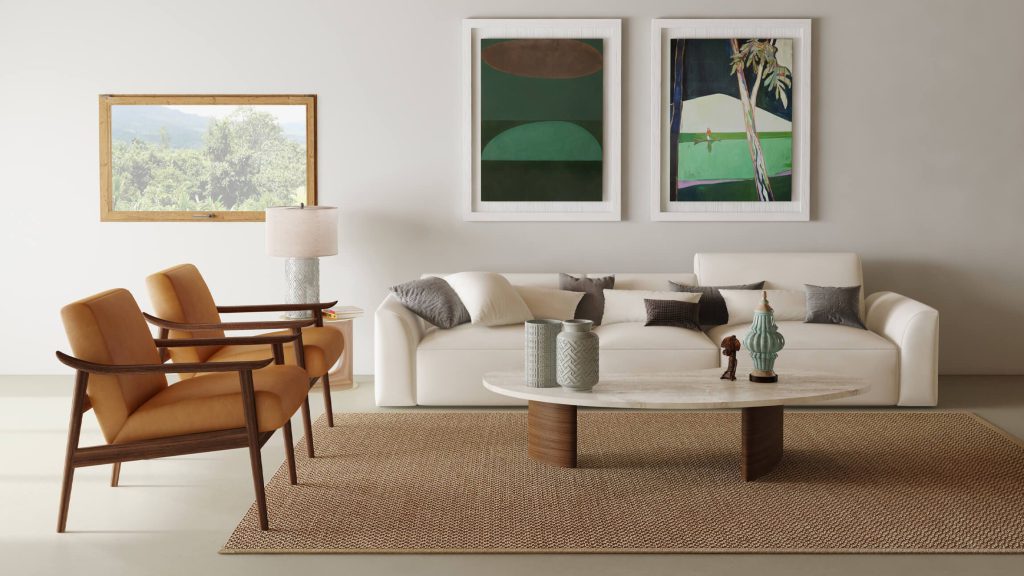
A furniture brand can have an excellent product and still produce marketing content that nobody remembers. Static product photos on white, a few lifestyle shots, maybe a catalog PDF. It gets the job done technically, but it doesn’t give the customer a reason to stop scrolling, look closer, or share what they’ve seen.
CGI opens up a much wider range of content formats — and the variety itself is part of the value. When your visual production isn’t limited by what a camera can physically capture, you can create content that shows products in ways traditional photography can’t: from every angle, in any setting, in motion, in the customer’s own room, or broken apart into individual components. Each format serves a different purpose in the marketing funnel, and together they give a furniture brand a content library that works across every channel.
Here are seven content types that our 3D rendering company produces for furniture brands, and what makes each one effective.
Photorealistic Product Visualization
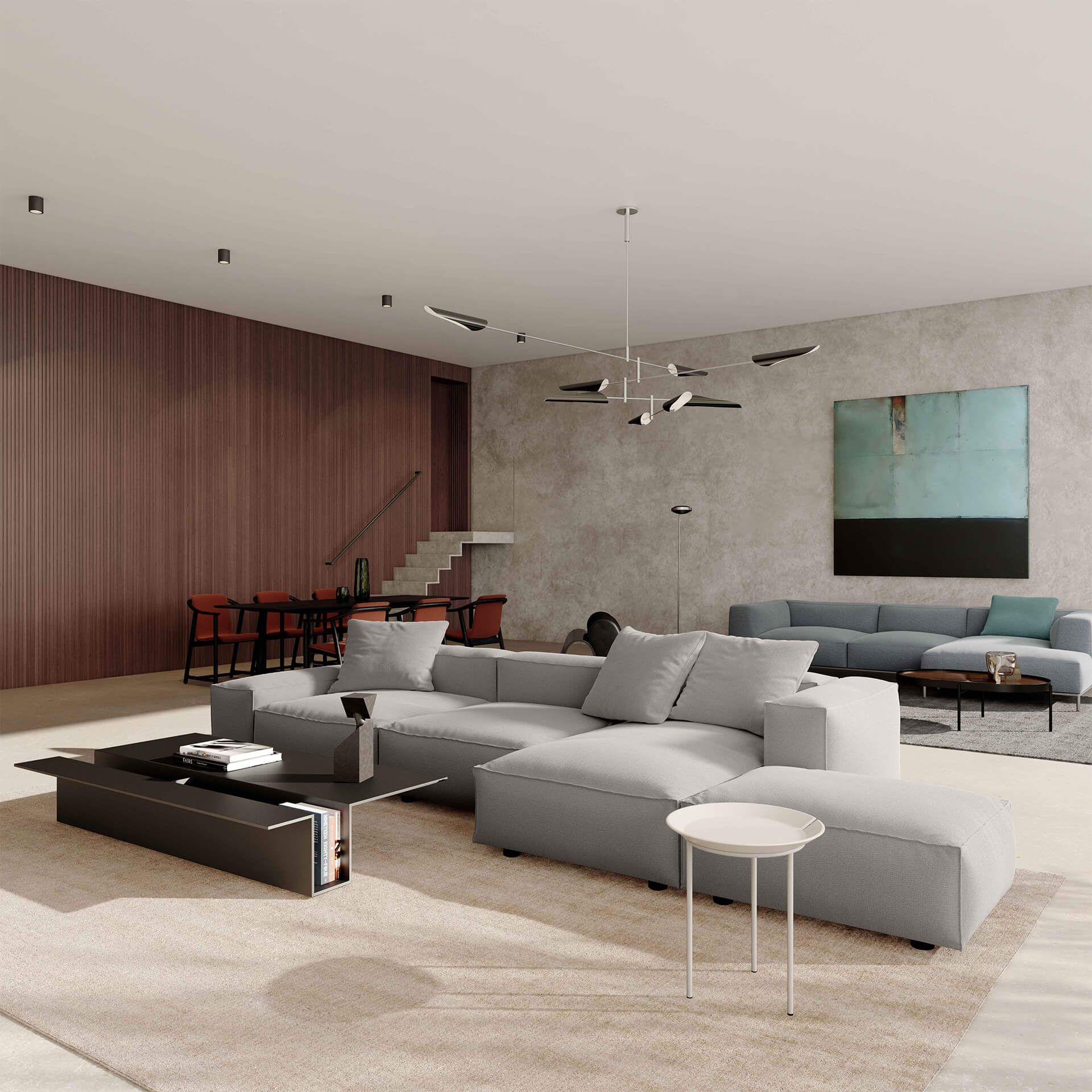
This is the foundation everything else builds on. A photorealistic 3D render captures a product with enough detail, lighting accuracy, and material fidelity that the viewer can’t tell it apart from a photograph. For e-commerce, that level of realism is the minimum — online shoppers need to trust that what they see on screen is what they’ll receive.
What makes photorealistic CGI more useful than photography isn’t just the visual quality. It’s the control. Lighting can be adjusted precisely. Camera angles can be explored without physically moving equipment. Material finishes can be swapped in minutes. And because the render is generated from a 3D model, the same asset that produces your hero product shot can also generate every other content type on this list.
The emotional dimension matters too. A well-rendered product placed in context — warm lighting, natural textures, a sense of space — creates an emotional response that a flat shot doesn’t. Shoppers aren’t just evaluating dimensions and specs. They’re imagining how the piece feels in a room. Photorealistic renders make that imagining easier.
Lifestyle Room Sets for Lifestyle Images
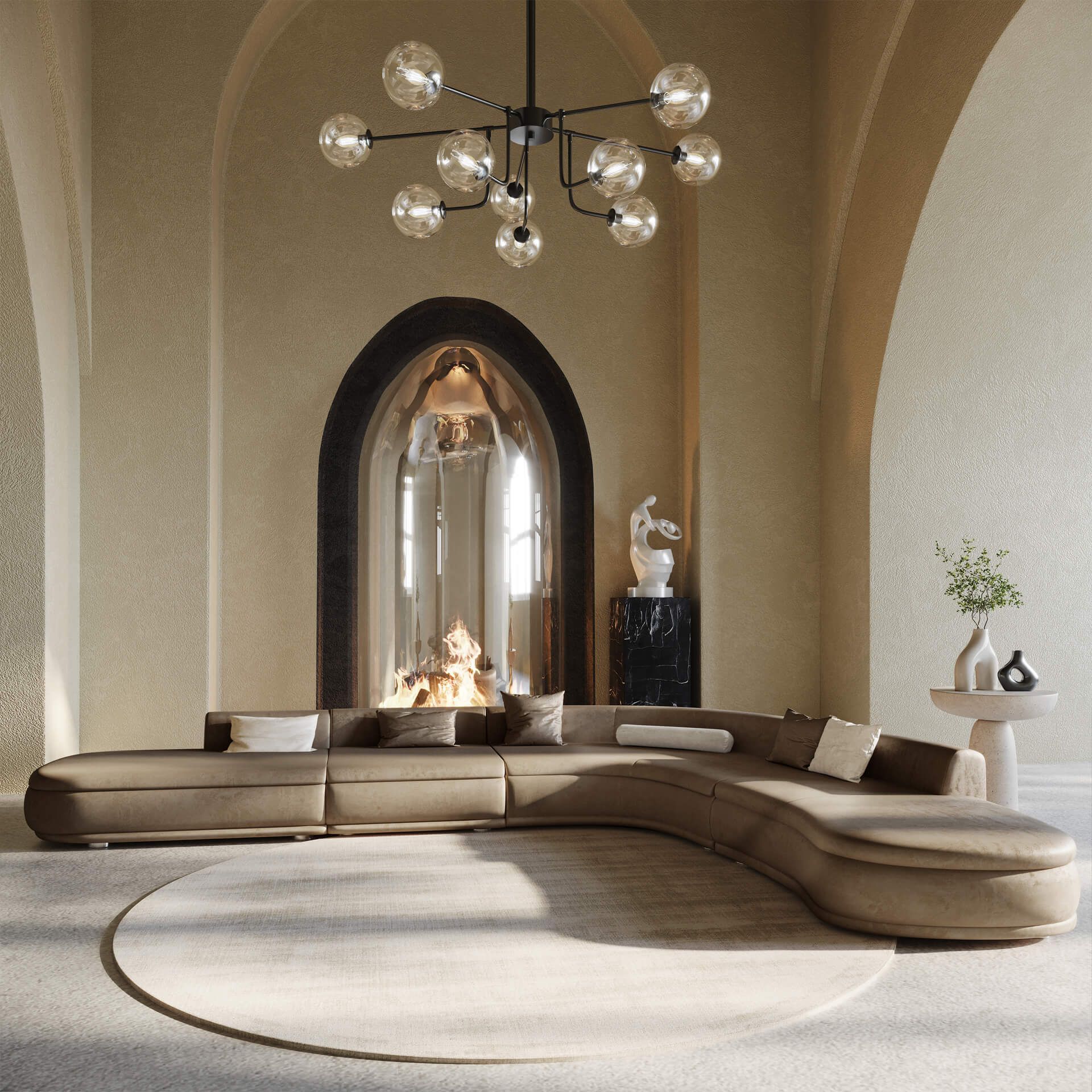
A product on a white background answers “what does it look like?” A product in a styled room answers “what would it look like in my home?” That second question is the one that drives purchase decisions for furniture.
Lifestyle room sets are CGI-built interior environments designed to showcase furniture in realistic settings. A mid-century sofa in a warm apartment with morning light through tall windows. A dining set in a minimalist Scandinavian kitchen. An outdoor sectional on a rooftop terrace at dusk. Each scene communicates a different aesthetic, a different price positioning, and a different target customer — without the brand saying a word about any of it.
The flexibility of CGI is what makes this practical at scale. One product can be placed in five different room styles to appeal to five different audience segments. Layouts, color schemes, lighting, and accessories can be adjusted based on market trends or customer feedback. A traditional photoshoot locked to a single location can’t offer that. This adaptability also creates opportunities for brand stretch — testing how products read in new contexts before committing to a repositioning.
Product 360-Degree Views for Furniture Items
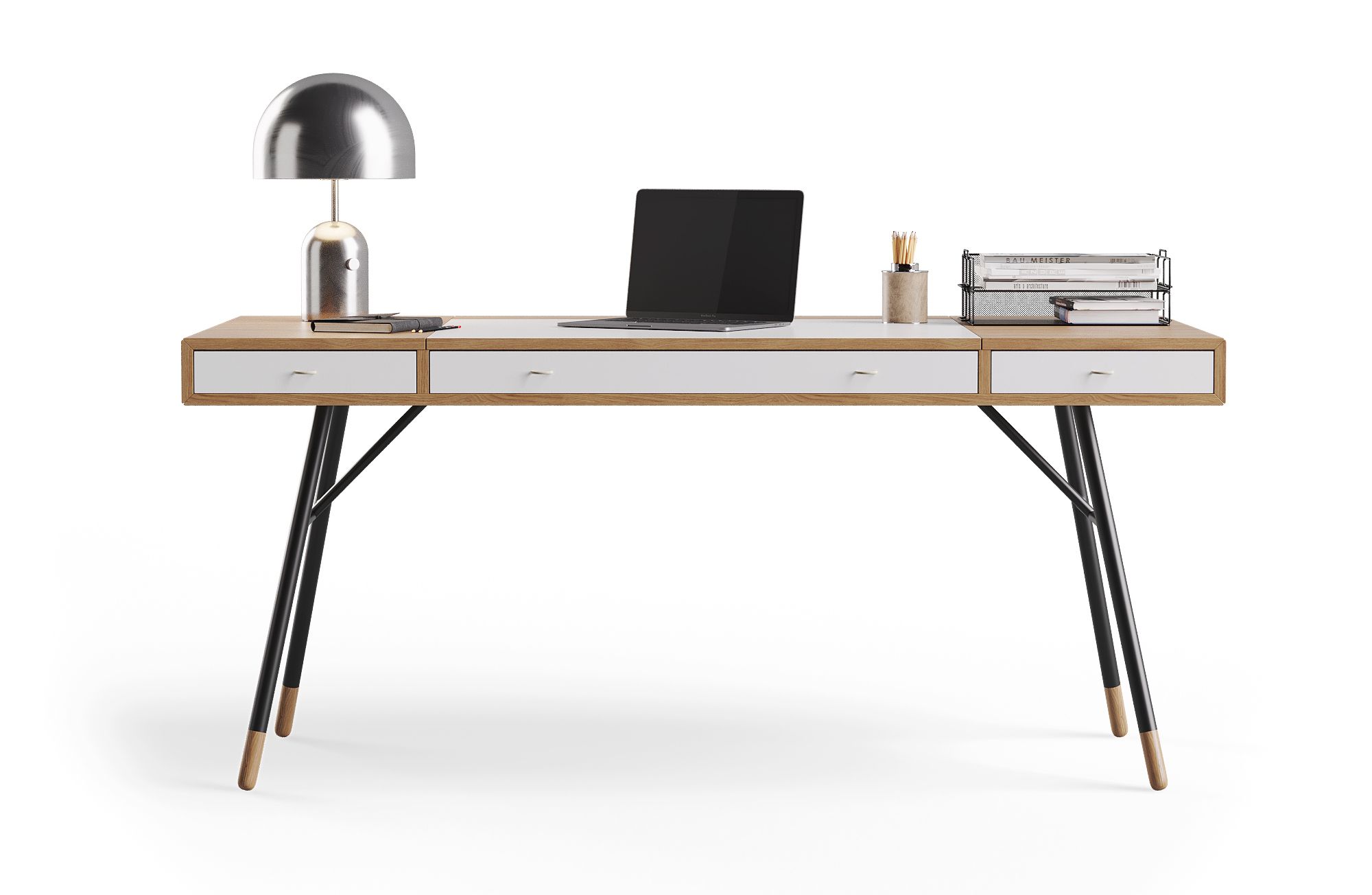 ↔ drag to rotate
When a customer shops in a physical store, they walk around the product. They see the back, the sides, the underside of the frame. Online shopping doesn’t offer that — unless you build it in.
360-degree interactive views let shoppers rotate a product on screen and examine it from any angle they choose. The sense of control changes the browsing dynamic. Instead of passively viewing pre-selected angles, the customer is actively exploring. Research has shown that this format increases conversion rates — when shoppers can fully examine a product, the uncertainty that prevents purchases drops.
For furniture, where proportions, joinery details, and back-panel finishes all influence the buying decision, 360-degree views answer questions that standard photography leaves open. The technology has also become straightforward to integrate into most e-commerce platforms, making it accessible to brands of any size.
Product 3D Animation in Furniture Storytelling
Static images show what a product looks like. Animation shows what it does. A video of a sofa recliner mechanism extending, a modular shelving unit being reconfigured, or a storage bed lifting to reveal the compartment underneath communicates functionality in seconds. A static photo of the same features would need half a page of explanatory text.
Short-form animated content is also built for social media. Instagram Reels, TikTok, YouTube Shorts — these platforms prioritize motion content in their algorithms. A five-second animation of a dining table unfolding from four-seat to eight-seat configuration is the kind of content people share, and shareability extends your reach without additional ad spend.
The production economics favor CGI animation over live-action video. No studio, no crew, no physical product on set. The 3D model that generated your product page imagery also generates the animation. One asset, multiple content formats — and each additional format costs a fraction of what a separate production would.
AR Revolution in Furniture E-Commerce
Augmented reality lets a customer point their phone at their living room and see your armchair sitting in the actual space, at accurate scale, in the finish they’re considering. That preview closes the single biggest gap in online furniture shopping: the customer can’t tell if it fits, matches, or looks right until it arrives. AR answers all three questions before the purchase.
The practical impact is measurable. Customers who preview a product in their own space buy with more confidence and return less often. For furniture — where return logistics are expensive and complicated — even a modest reduction in returns has significant financial impact.
V-Commerce shopping takes this further. Virtual reality showrooms let customers walk through fully styled environments and interact with individual pieces, experiencing proportions and spatial relationships in a way that flat screens can’t replicate. The technology is still maturing, but the trajectory is clear: the more immersive the shopping experience, the higher the customer confidence and the lower the return rate.
Both AR and VR experiences are powered by the same 3D models that produce your product page renders — meaning the investment in modeling serves multiple purposes across your marketing stack.
Product 3D Configurator for Furniture Customization
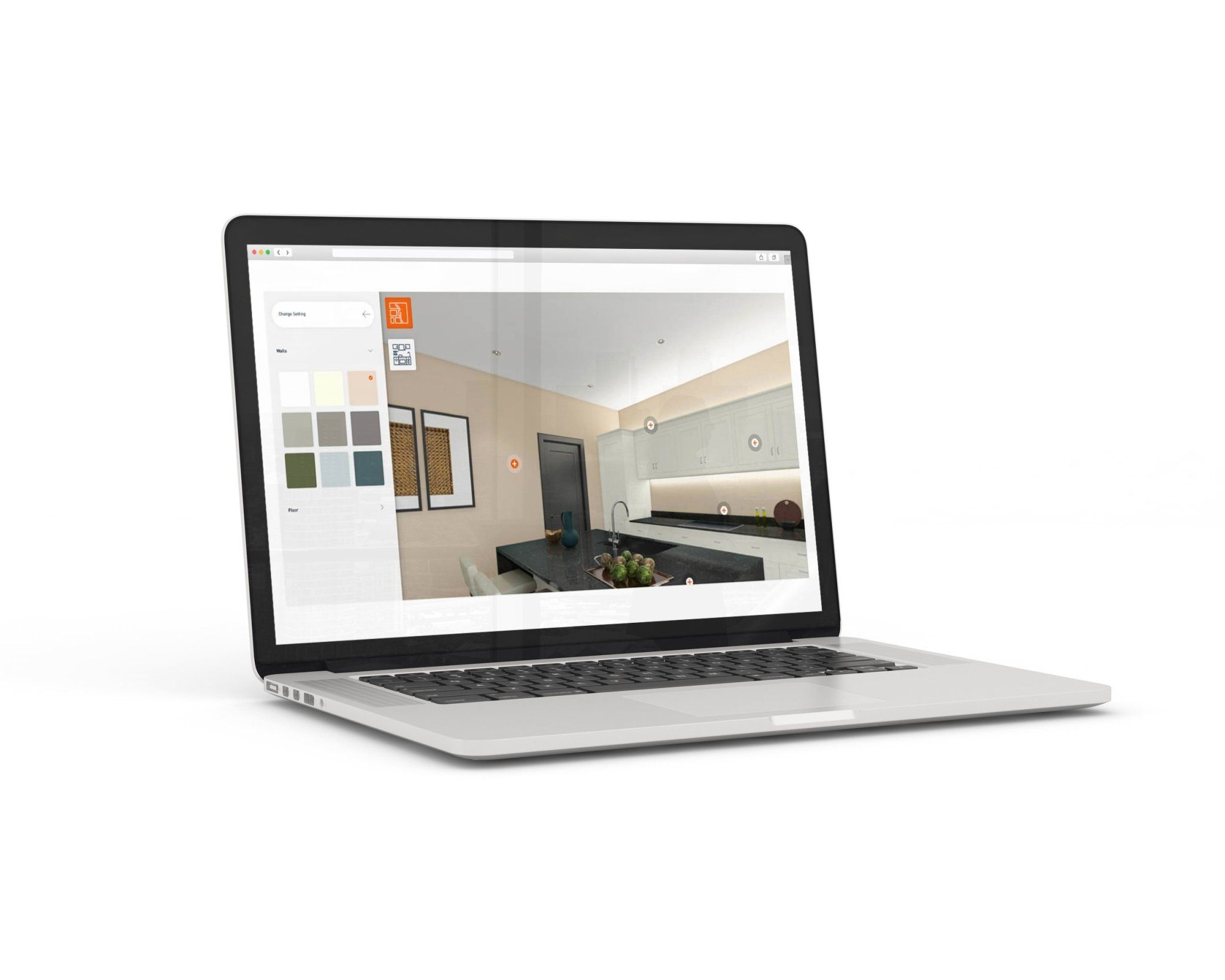
A configurator turns the shopping experience from passive browsing into active participation. Instead of looking at one pre-set version of a product, the customer chooses the fabric, changes the leg finish, swaps the cushion color, and watches the image update in real time. By the time they’ve spent three minutes customizing a sofa, they’re invested in that specific configuration — and significantly more likely to buy it than someone who scrolled past a static image.
For furniture brands that offer customization options (and most do, even if it’s just color and fabric choices), a configurator makes those options tangible. A dropdown menu listing “walnut, oak, natural, espresso” tells the customer almost nothing. A 3D model that visually shifts between those finishes tells them everything.
There’s a retention effect too. Customers who’ve designed their own version of a product develop a sense of ownership before the purchase. They’re more likely to return to a brand that gave them that level of creative involvement. Configurators turn what could be an overwhelming number of options into an engaging experience that simplifies the decision rather than complicating it.
Behind-the-Scenes Insights of Furniture Production

This is the category that gets underestimated most often. Behind-the-scenes content — assembly animations, feature walkthroughs, exploded views, production process videos — does something none of the other six types can: it builds trust through transparency.
Assembly animations guide a customer step-by-step through putting a product together, with each component clearly identified and each step precisely illustrated. CGI handles this better than live-action because every part is perfectly visible, perfectly labeled, and perfectly positioned. No shaky camera, no obstructed angles, no “wait, which screw was that?”
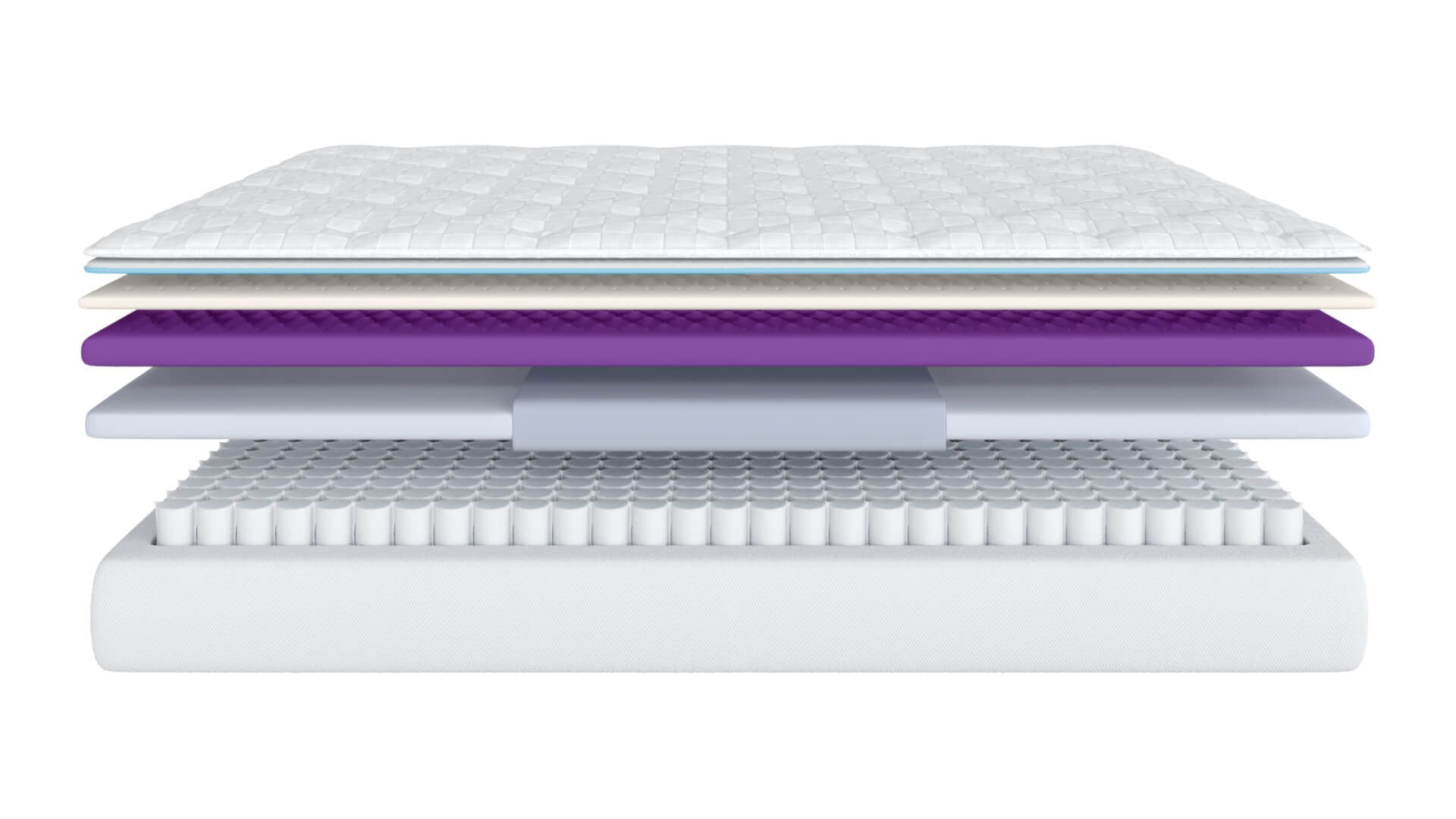
Feature videos isolate and highlight specific design elements — a soft-close drawer mechanism, the internal bracing structure of a table, the ventilation channels in a mattress. These close-up CGI walkthroughs communicate engineering quality in a way that a product photo simply can’t reach.
Exploded views pull a product apart into its individual components, displayed spatially to show how everything fits together. For products where build quality is a selling point — and for furniture it usually is — this format demonstrates durability and construction integrity more convincingly than any written claim.
Production process content and interviews with designers or craftspeople add a human dimension to the brand. Showing how products are made, who makes them, and what decisions go into the design process builds a connection that purely product-focused content doesn’t create. Customers increasingly want to know the story behind what they’re buying, and this content provides it.
Each of these seven content types serves a different job — product visualization for clarity, lifestyle sets for aspiration, 360 views for exploration, animation for functionality, AR for confidence, configurators for personalization, and behind-the-scenes content for trust. A furniture brand using all seven has a content library that covers every stage of the customer journey, from first discovery to post-purchase satisfaction.
Our 3D modeling services produce every content type on this list from a single 3D model, giving your brand a visual toolkit built for every channel and every campaign.